Exploring Linked Lists: A Fundamental Data Structure

Linked lists are a fundamental data structure in computer science, offering a versatile way to store and manipulate data. Unlike arrays, linked lists don't require a fixed size and are highly adaptable. In this article, we'll delve into singly linked lists, doubly linked lists, and even explore their applications in real-world scenarios.
Singly Linked Lists
A singly linked list is a collection of nodes, each consisting of an element and a reference to the next node. The first node is called the head, and the last node is the tail, which is identified by a null reference. These lists are linearly ordered, and their elements are stored in a particular order determined by the chain of next references.
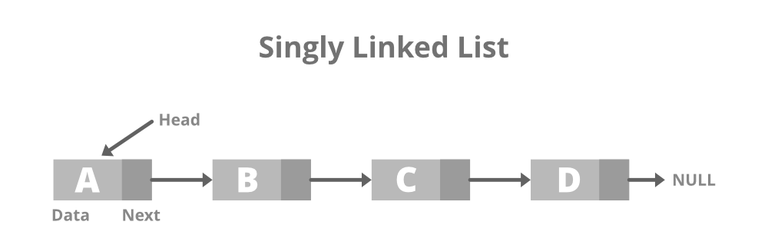
Implementing a Singly Linked List
To implement a singly linked list, you need a Node class to define the type of objects stored in the list. Then, a class, such as SLinkedList, can be created to define the actual linked list, keeping a reference to the head node and a counter for the total number of nodes.
Insertion in a Singly Linked List
Inserting an element at the head of a singly linked list is straightforward. You create a new node, set its next link to the current head, and then update the head to point to the new node. This operation is efficient, even if the list is empty.
Inserting an Element at the Tail
Inserting an element at the tail of the list is also manageable. You create a new node, set its next reference to null, update the next reference of the current tail node to the new node, and finally, update the tail reference to the new node.
Doubly Linked Lists
While singly linked lists offer flexibility, they are not always efficient for operations that require accessing the node before the one you want to manipulate. Doubly linked lists resolve this issue by providing a reference to the previous node as well. This added reference allows for quick updates, such as insertion and removal at both ends and in the middle of the list.
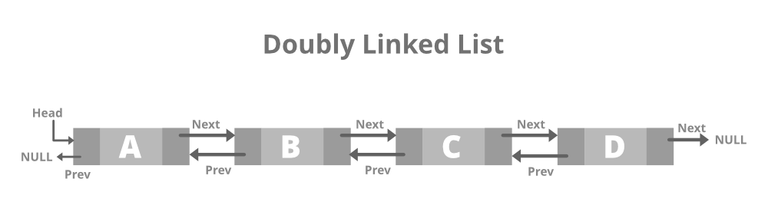
Circularly Linked Lists
Circularly linked lists extend the concept of linked lists by connecting the tail node back to the head node, creating a circular structure. This structure is useful in circle-based games like "Duck, Duck, Goose." The cursor, a special node, is used as a reference point for traversing the list.
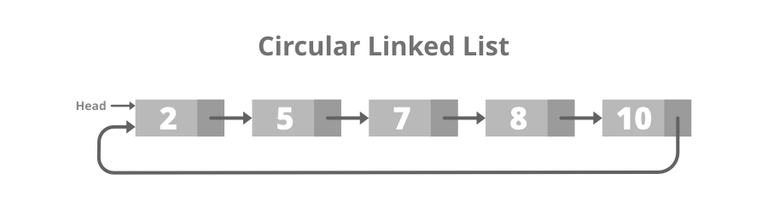
Simulating sample program like Duck, Duck, Goose
A circularly linked list can efficiently simulate games like "Duck, Duck, Goose." Children are represented as nodes, the "it" person is the child after the cursor, and random choices identify ducks and the goose. The game proceeds with node removal, random selections, and reinsertion.
Sorting a Linked List
Sorting a doubly linked list is a common use case. The insertion-sort algorithm is a simple and effective way to arrange the elements in ascending or descending order. It works by repeatedly taking elements from the unsorted part and inserting them into their correct position within the sorted part.
Conclusion
Linked lists are a versatile data structure that offers adaptability and efficiency for various operations. Understanding singly linked lists, doubly linked lists, circularly linked lists, and sorting algorithms like insertion sort can help you tackle a wide range of computational problems. These structures are the building blocks of more complex data structures and algorithms, making them a fundamental topic in computer science.
Posted using Honouree